FLASH SALE Get 20% OFF everything using the coupon code: FLASH20 View Pricing Plans →
Foodica ships with four distinct homepage layouts, so you can pick the one that fits your workflow and editing style. All four share the same theme core — headers, archives, single posts, typography, and recipe styling are identical. They differ only in how the homepage is built and edited.

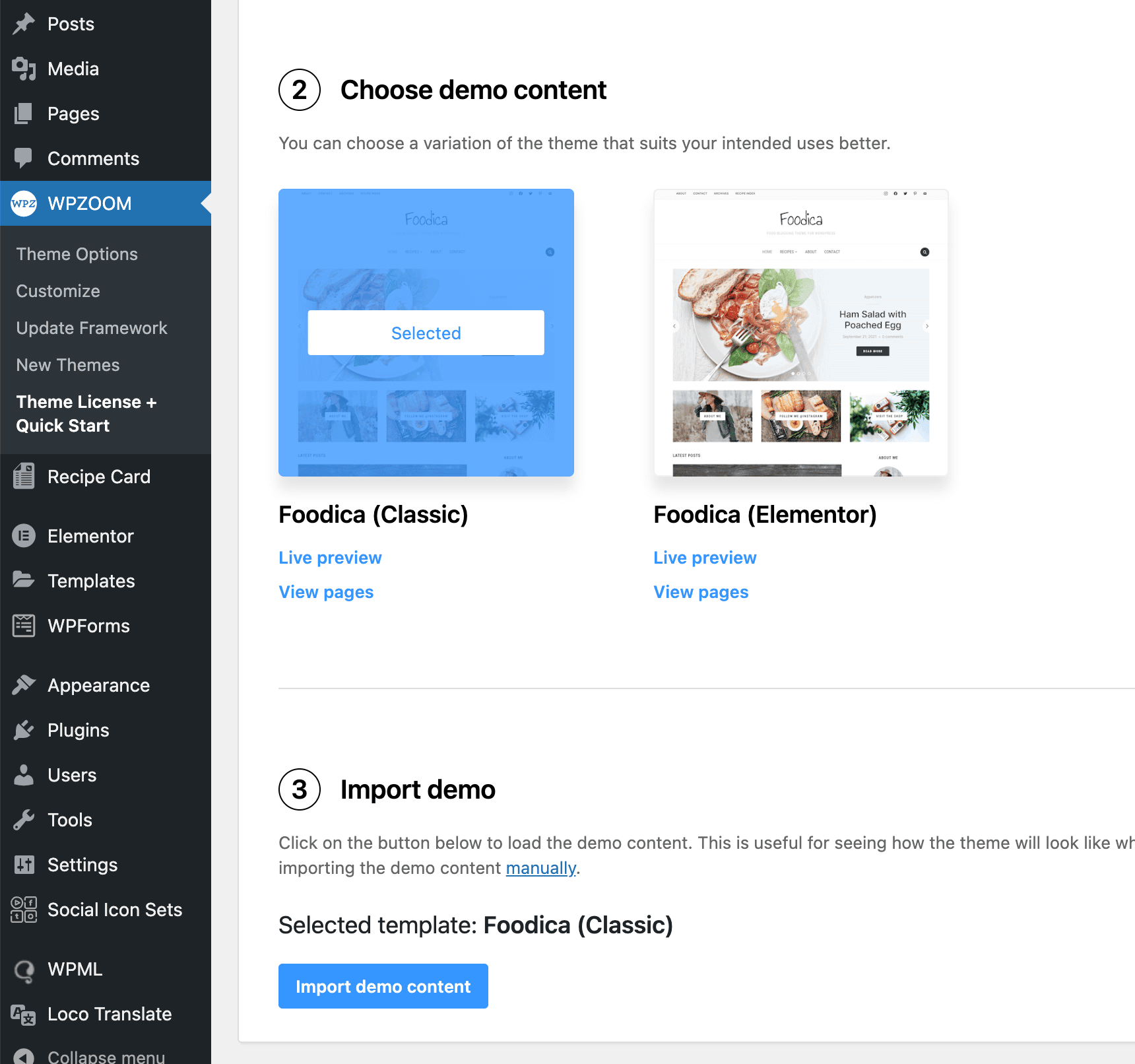
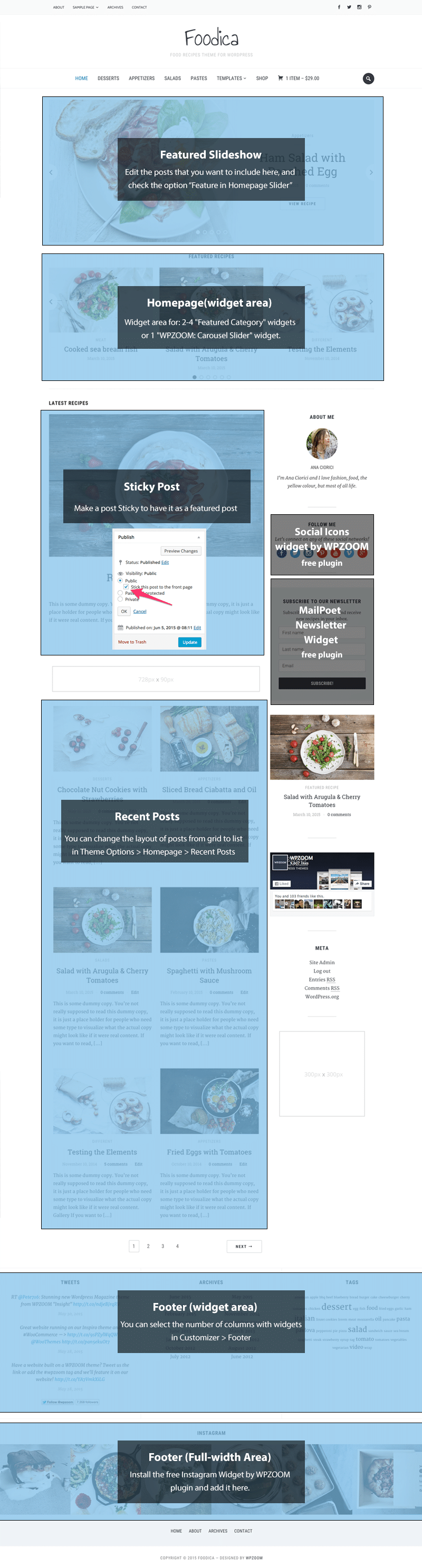
The original Foodica homepage — a fixed layout with a slider at the top, followed by widget areas and a recent-posts section. It’s the fastest way to get the traditional blog look, but the layout positions are predetermined: moving sections around or inserting new ones is limited to what widgets and theme options allow.
Best for: users who want a one-click setup and don’t plan to rearrange sections.
The homepage is built with the Elementor page builder, giving you full visual control: drag-and-drop sections, custom widgets, and complete flexibility to add or remove anything. Requires the free Elementor plugin.
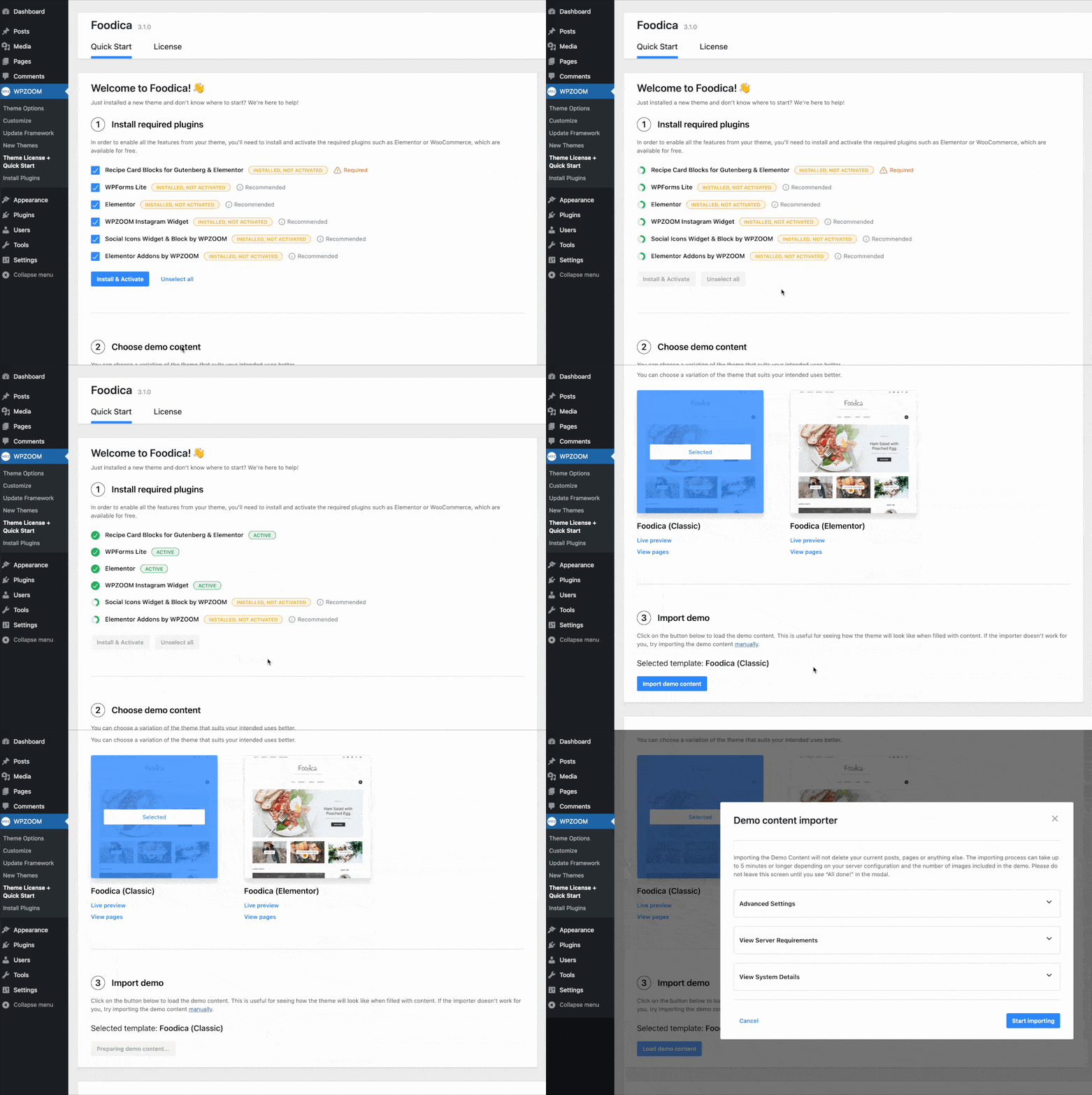
You can also skip the demo importer and manually import the Elementor homepage layout.
Best for: users who want maximum visual customization and are comfortable with page builders.
A clean, editorial block-based homepage built entirely with the native WordPress block editor — no page builder plugin required. Stripped-back design, generous whitespace, strong typography, and the latest posts grid. No sliders, no widget areas, no extra dependencies.
Best for: food writers who want a fast, lightweight, editorial feel without page builder bloat.
A warmer, more visual block-based homepage that builds on the Minimal foundation. Rounded category thumbnails, a Featured Categories band, cover-image Collections, an About section, trending recipes with a sectioned header, and a dark rounded newsletter card. Also block-only — no page builder required — and uses the new Responsive Columns feature to keep the grid tidy on mobile (2 columns by default, configurable per block).
Best for: food blogs that want a richer, more visual homepage without giving up the speed and simplicity of the native block editor.
| Layout | Editor | Extra plugin? | Flexibility | Performance |
|---|---|---|---|---|
| Classic | Theme options + widgets | No | Low | Fast |
| Elementor | Elementor | Yes (Elementor) | Highest | Heavier |
| Minimal | Block editor | No | Medium–High | Fastest |
| Modern | Block editor | No | Medium–High | Fastest |
You can switch between layouts at any time — your posts, recipes, categories, and media library are never affected.
The diagram above shows the structure of the Classic layout. For the structure of Minimal or Modern, see their respective setup guides linked in the sections above — those layouts are composed of standard WordPress blocks you can rearrange freely in the block editor.
Color Schemes can be changed from Customizer > Color Scheme. In versions 5.0+ you can also apply Minimal or Modern style presets globally from WPZOOM > Demo Importer — these update colors, typography, border radius, and spacing tokens without changing your homepage layout.
To customize different elements of the theme, go to the Appearance > Customizer page.