New Inspiro AI Demo Generator — can't find the perfect demo? Describe your website and AI builds a custom one in about 2 minutes. Learn more →

Knowledge Base

Documentation

Theme Documentation


Plugin Documentation


Resources

Foodica – Recommended Image Sizes & Optimizations

This article refers to Foodica (PRO)

Foodica crops your Featured Image into several different sizes depending on where it appears — the slider, post grids, the Recipe Index, single posts. This guide covers what to upload, which size is used where, and how to keep your images fast.


Table of Contents

  1. What size to upload
  2. Every image size Foodica registers
  3. Changing the aspect ratio of thumbnails
  4. Turning off sizes you don’t use
  5. Recipe card images
  6. Optimizing your images

Just migrated to Foodica from another theme? Regenerate your thumbnails so every image is re-cropped at Foodica’s sizes. Do this after any change on this page, too.


What size to upload

Upload Featured Images at least 2280px on the longest side.

That number comes from the largest size Foodica generates: the retina full-width post image at 2280×1000px. If your original is smaller than that, WordPress can’t produce the crop and falls back to a smaller image, which looks soft on retina screens.

A safe habit is to upload at around 2500×2500px and let WordPress do the rest. You don’t need to crop to an exact shape — just make sure both dimensions are generous, since Foodica crops both landscape and portrait versions from the same file.


Every image size Foodica registers

Size Dimensions Where it’s used
Landscape Featured Image 360×240px Homepage and archive posts in the Grid style (Landscape 4:3) and the List style
Portrait Featured Image 360×540px Grid style set to Portrait (3:4)
Portrait Featured Image (retina) 720×1080px Retina version of the above
Square Featured Image 360×360px Grid style set to Square (1:1), the Recipe Index, the Carousel widget and the Featured Category: Homepage widget
Featured Slider Image 750×500px The homepage slider, sticky posts, and the featured image at the top of single posts
Featured Slider Image (retina) 1500×1000px Retina version of the above
Normal Size (no crop) 750px wide The featured image at the top of posts when Keep Featured Image Original Aspect Ratio is enabled — the height is never cropped
Full-width Post Featured Image 1140×500px The homepage slider in the transparent/full-width style, and posts using the Full-width post layout
Full-width Post Featured Image (retina) 2280×1000px Retina version of the above — the largest size Foodica generates

Which size a single post uses

The featured image at the top of a post is one of three sizes, depending on your settings:

  • Post Layout is Full-width → 1140×500px (2280×1000px on retina)
  • Keep Featured Image Original Aspect Ratio is on → 750px wide, uncropped
  • Otherwise → 750×500px, cropped

Post Layout and the aspect-ratio option are both covered in Single Post Options.


Changing the aspect ratio of thumbnails

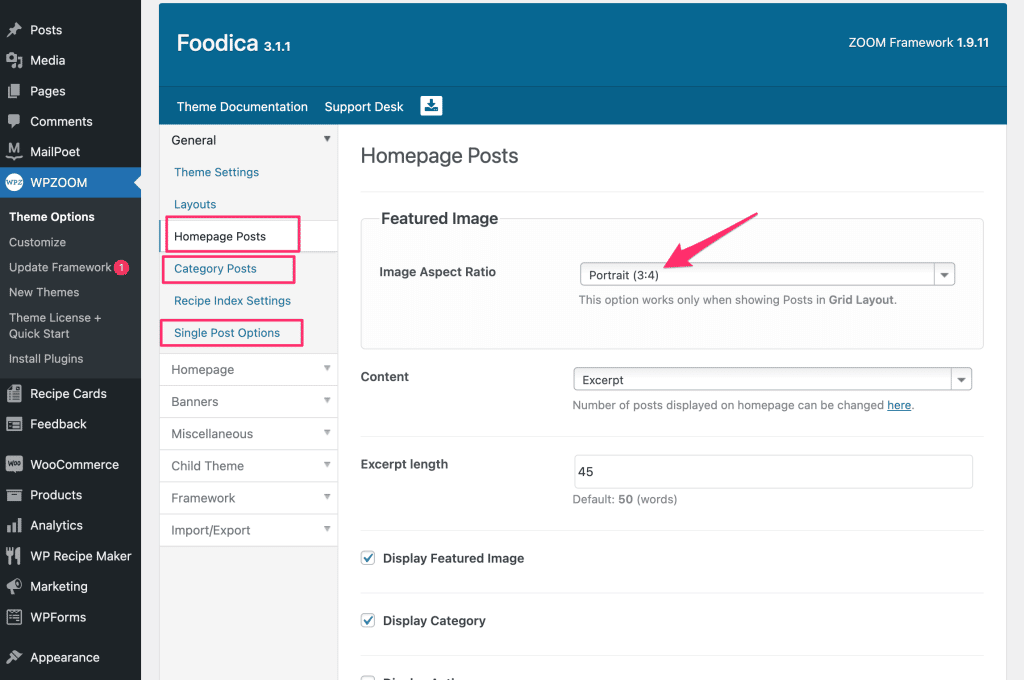
Foodica’s post grids can display thumbnails as Landscape (4:3), Portrait (3:4) or Square (1:1). The setting lives in Theme Options and exists separately for each area:

  • Homepage Posts — defaults to Landscape (4:3)
  • Category pages — defaults to Square (1:1)
  • Recipe Index — defaults to Portrait (3:4)
The Image Aspect Ratio option in Theme Options

The aspect ratio only applies to the Grid post style. The List style always uses the landscape thumbnail, and the Blog style uses the uncropped 750px image. See Post Styles, Layouts & Columns for the full picture.

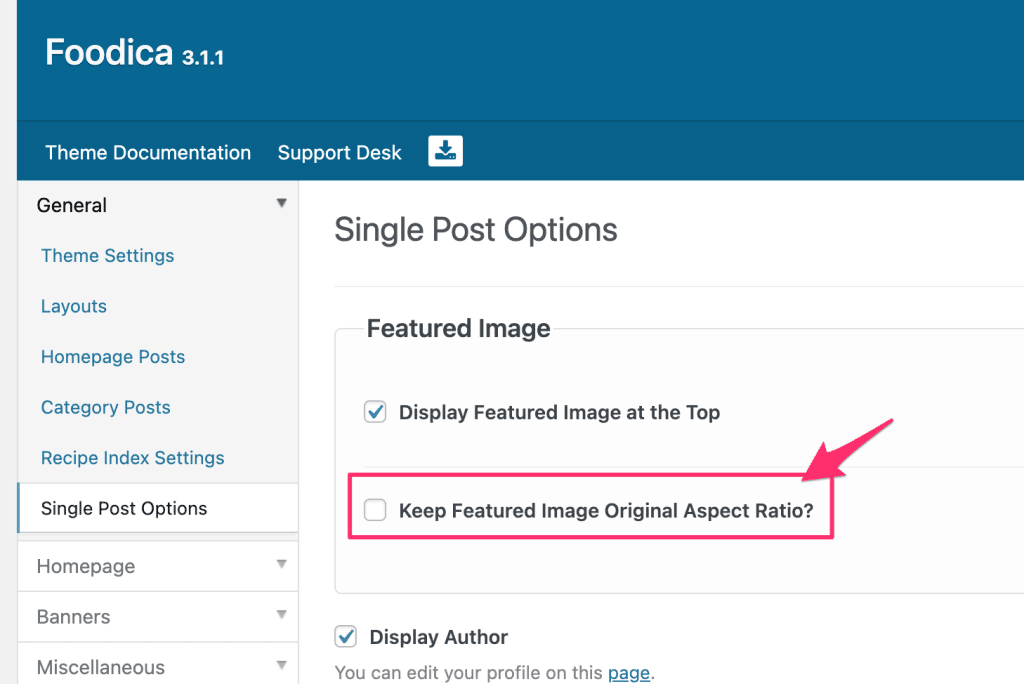
To stop the featured image at the top of single posts from being cropped at all, enable Keep Featured Image Original Aspect Ratio:

Keep Featured Image Original Aspect Ratio in Theme Options

Want to control which part of an image is kept when it’s cropped? See How to set how a Thumbnail is Cropped.

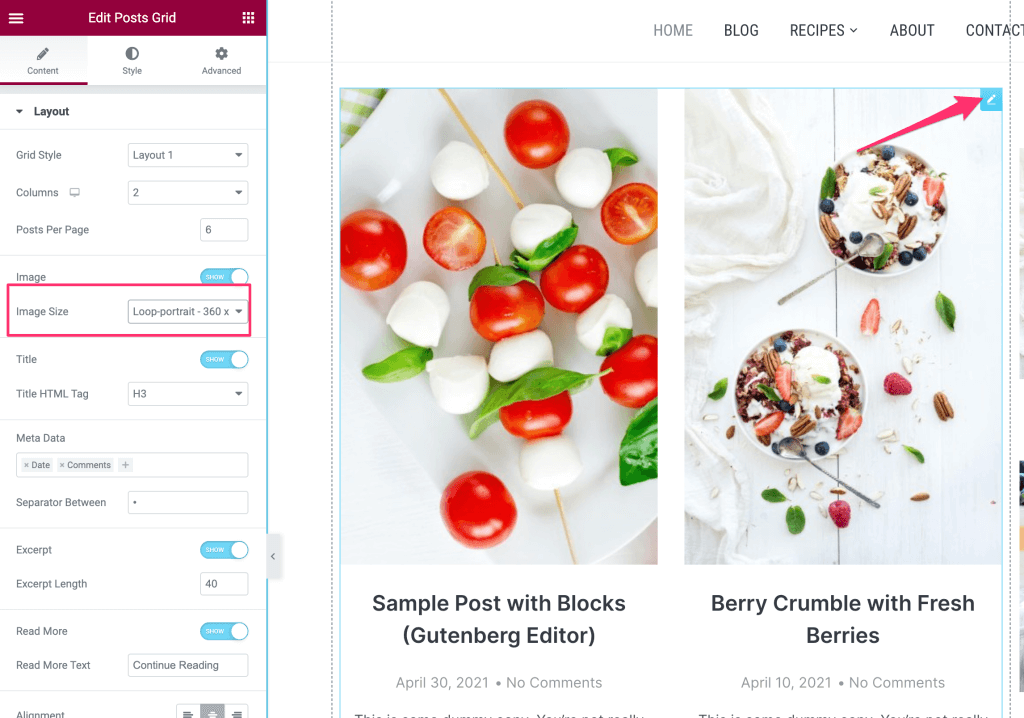
If you’re building your front page with Elementor instead, the image size for post grids is set in the Posts Grid widget‘s own settings.


Turning off sizes you don’t use

Every registered size means another file generated on your server for each upload. If your site never uses portrait thumbnails or the full-width post layout, you can switch those sizes off in Theme Options → Optimization:

The Image Sizes panel in Theme Options → Optimization

This won’t make your site load faster — the sizes it’s actually using are still generated — but it makes uploads quicker and keeps your uploads folder much smaller.

Two things to check before you disable a size. The Square size is used in more places than its description suggests — post grids set to Square, the Recipe Index, the Carousel widget and the Featured Category: Homepage widget all rely on it. And disabling a size doesn’t remove files that already exist; it only stops new ones being made.


Recipe card images

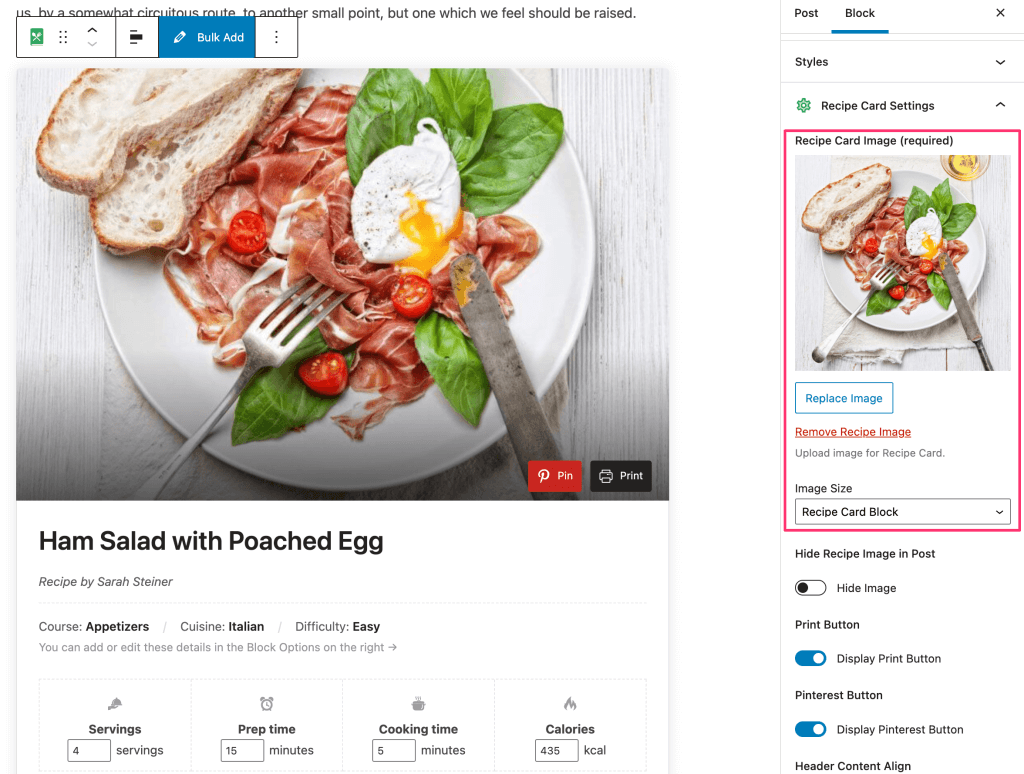
If you use a recipe plugin such as our Recipe Card Blocks, keep in mind that your featured image and your recipe card image appear in different places.

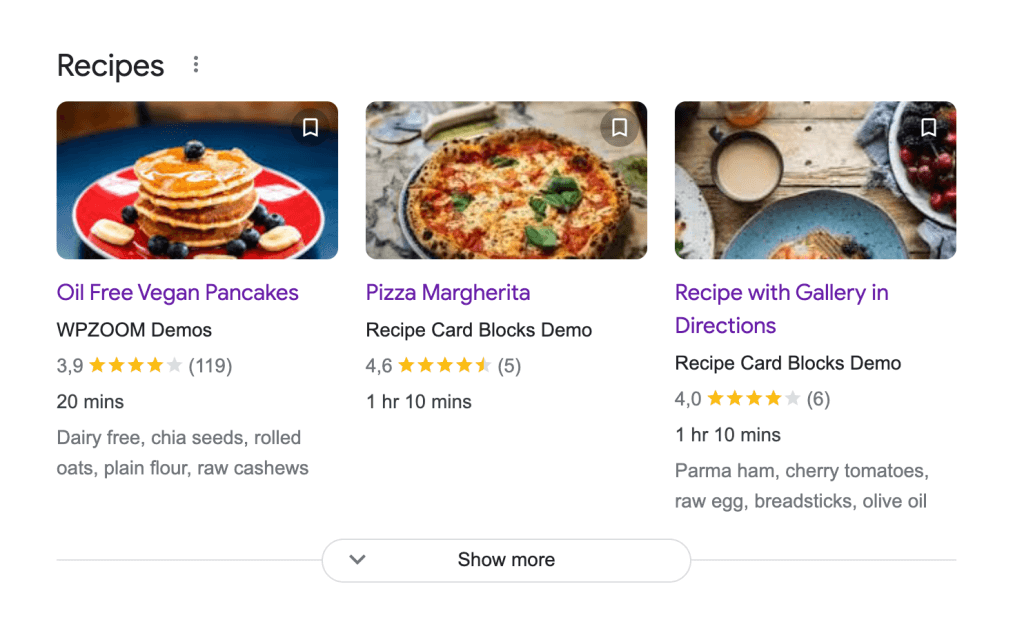
The recipe card image is what Google shows in its recipe carousel — it comes from the recipe card’s own image field and carries the recipe’s structured data.

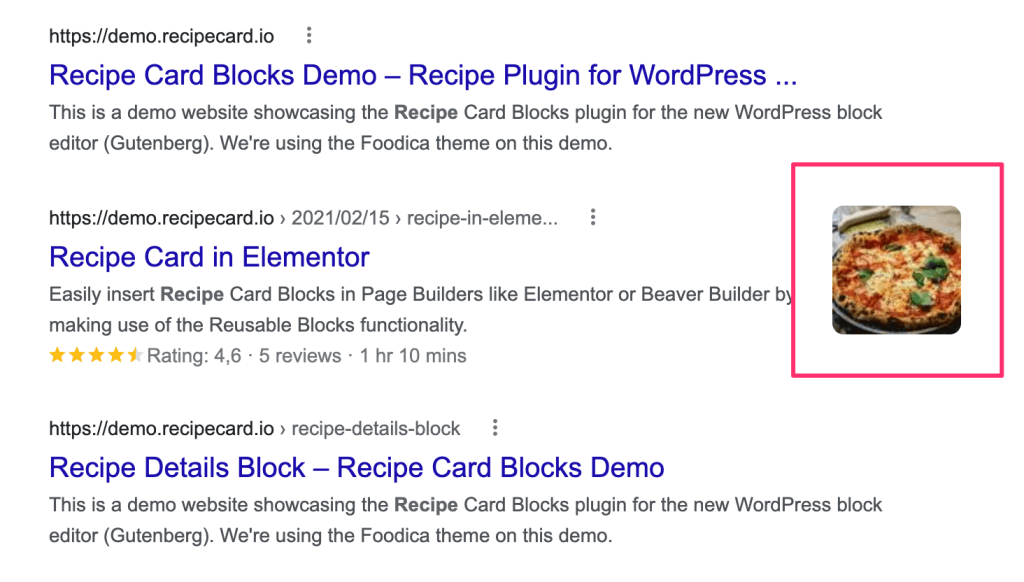
The featured image is what appears in ordinary search results and as the preview when someone shares your link on social media.

It’s worth setting both, and setting them well: they’re often the only thing a reader sees before deciding whether to click.

Featured image not showing up when you share a post on Facebook? See How to fix incorrect Facebook thumbnails.


Optimizing your images

Food photography is the heaviest thing on a food blog, so two optimizations are worth doing:

Lazy loading — images below the fold load only as the reader scrolls to them. WordPress does this natively for most images, and caching plugins like WP Rocket extend it to background images and iframes.

Modern image formats — WebP files are typically 25–35% smaller than the equivalent JPEG at the same quality. WordPress accepts WebP uploads directly, so you can convert before uploading with a free tool like TinyPNG, or install a plugin such as Imagify or TinyPNG’s plugin to compress and convert everything automatically as you upload.

Compress your originals before uploading where you can — every generated size is made from that file, so a bloated original multiplies across your whole media library.


See also:

Last updated on August 30, 2026