Besides posts and pages, social icons can live in a widget area (a sidebar or footer), in a navigation menu, or in an Elementor layout. This article covers each of those placements.
Table of Contents
On most current themes, Appearance → Widgets is a block editor. Click + in the widget area where you want the icons, search for Social Icons by WPZOOM and add the block. It is the same block as in posts, with the same options: see Adding Social Icons with the Social Icons Block.
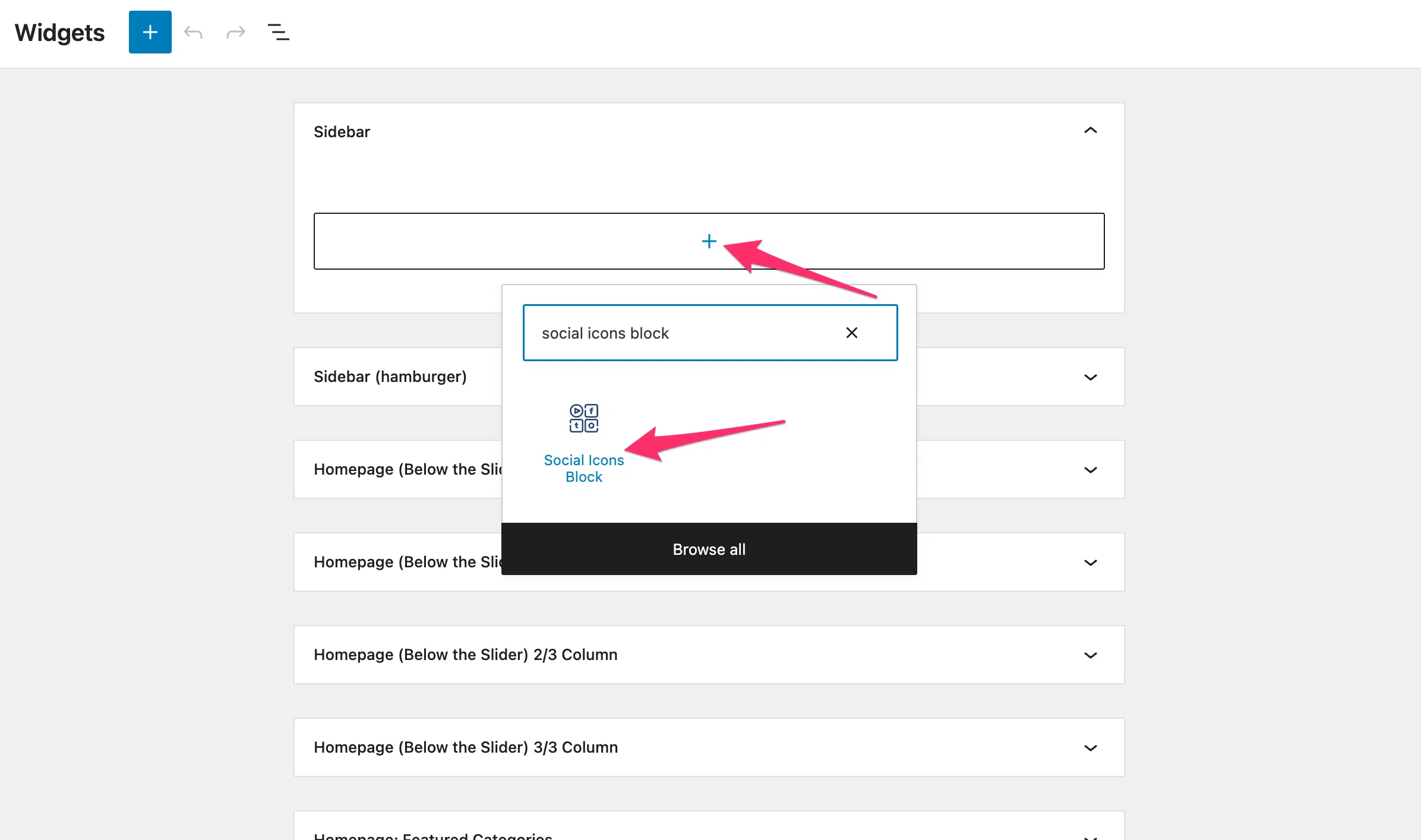
On a block theme (one with Appearance → Editor and no Widgets screen), add the block to the template part where the sidebar or footer lives.
For a Social Profiles box in a sidebar (handles and follower counts), use the Social Profiles block the same way.
Themes that use the classic Widgets screen (or the Classic Widgets plugin) get a Social Icons by WPZOOM widget. Drag it into a widget area and fill in:
rel options.The widget also works in the Customizer under Widgets.
With WPZOOM Connect Pro, Appearance → Menus gets a Social Icons by WPZOOM box in the “Add menu items” column:
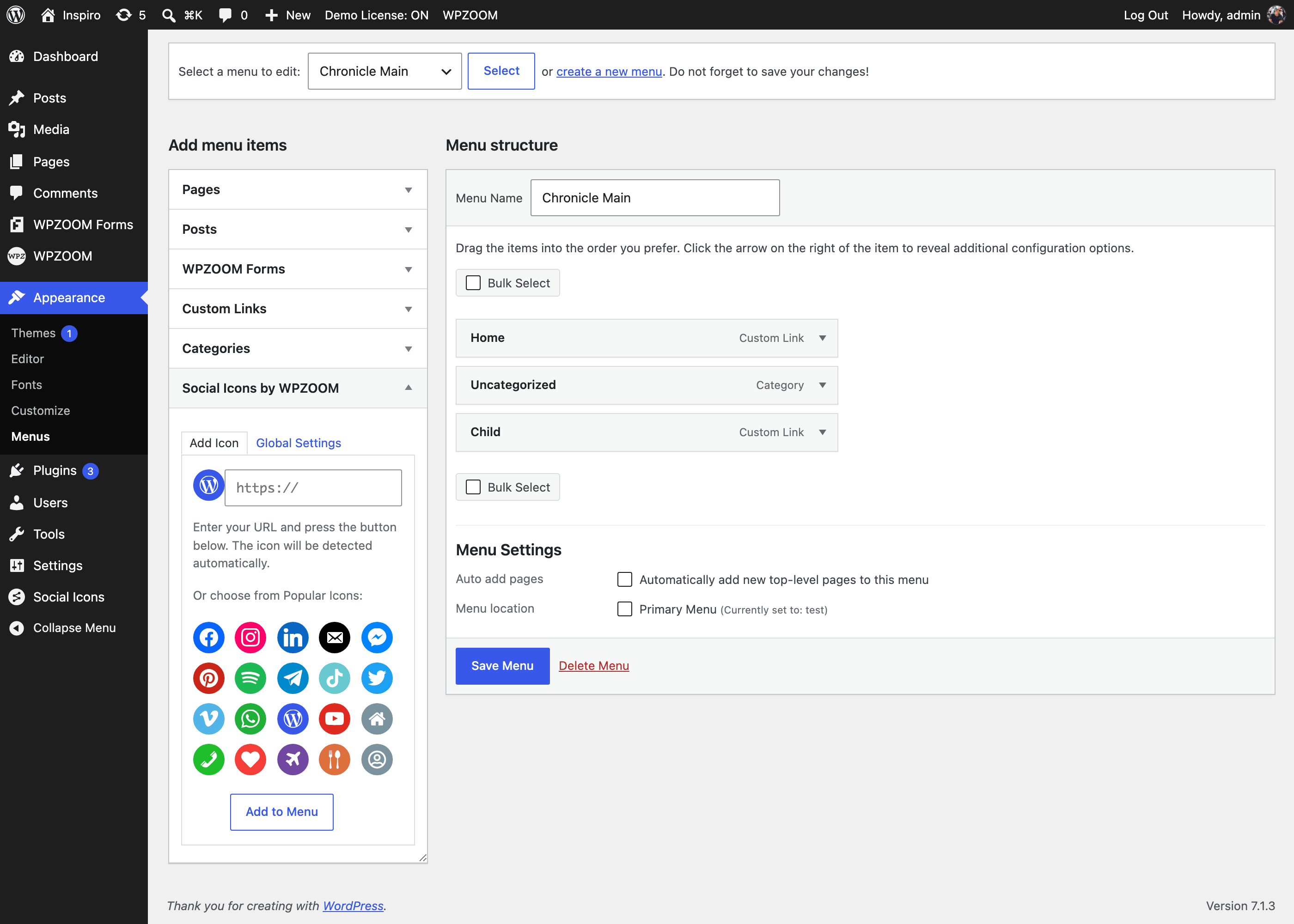
rel attributes.Icons are placed where you drag them in the menu structure, so they can sit at the end of a header menu or in a footer menu, next to regular links.
When Elementor is active, the free plugin adds a Social Icon Sets widget in the Social Icons by WPZOOM category of the Elementor panel. Drag it into your layout and pick a set under Select a Set. Sets are created on the Icon Sets screen: see Icon Sets and the Shortcode.
Elementor also renders WordPress blocks and shortcodes, so the Social Icons block (in a Text Editor or shortcode widget via the shortcode below) works too.
Every icon set has a shortcode, , that works in any field that accepts shortcodes: a theme option, a page builder, a template. See Icon Sets and the Shortcode.
